
Smart. You. This.
a plain truth

What I’d like to share is, upon reflection, simple and boring. For reasons beyond my understanding, this has become a specialty of mine, a recipe for obvious and dumb success. These are good recipes, because when you slip love into them, the boring and simple, the pleasure of life with friends and loved ones becomes plain.
We were in class the other day, history class. We’ve been studying American history all year, mostly with a focus on how people got to the Americas 20,000 years ago, early civilizations, the age of European exploration (and exploitation), New Mexico history, and finally Jamestown, the 13 colonies, the American Revolution, the French Revolution, and the Civil War. In the last month, I’m just having a fun and diverting conversation about 20th century history, a light touch on some of the subjects we haven’t been able to dive into more deeply.
Oh well. So, there we are in class, talking about the Roaring 20’s, swing music, flappers, prohibition, and the stock market. One of my students has his hands busy the entire time. This is normal enough. I always let the kids draw or fidget, even stand or complain. I don’t find these things distracting. Class, when we’re really grooving, can tolerate people being people. I think we learn well when we’re allowed to be who we are.
Anyway, this student (I’m going to call them “they”, not for LGBTQ reasons, but merely for privacy) has their head down and occasionally I’m recalling my teacherly stature and reminding them of their foresworn duty to respect my intelligence and wit. Darn it.
But they don’t care. Or, they do. It’s a laughable and pleasant dynamic for me. The other kids are engaged, it’s a raucous conversation. And, to be fair, this particular student is clearly listening and engaging in the conversation too, thought mostly with judicious banter.
The truth is that class is often a wild tangle of ideas, dates, truths, stories, nonsense, laughter, uncertainty, and storytelling. Song lyrics seem to pry their way into almost every topic we touch. My sense, after years of teaching, is that this is in fact a very effective way to teach. We’re having fun, and that stimulates neurons in unique and memorable ways.
Back to this student. They struggle, on occasion, to see themselves as “smart,” or whatever the heck that means. To me, it’s nonsense. I’ve never met a person who isn’t smart. It’s simply a matter of what this person’s life has led them to be smart about.
Nevertheless, I’m an obvious sort of nerd, a math and science geek, so I can have the appearance of intelligence from time to time, and of course my students are going to measure themselves against me whether I wish them to or not. This particular teen, because their strengths are in realms most traditional schools (and therefore books, movies, and media) don’t emphasize, often has the sense that they aren’t…you know…smart.
I could go on and on about how wonderful this person is. How complex. How irritating and delightful. I love this in people. I love the tangy, complicated nature of what it is to be human – the joys, the weaknesses, the pride, the angst. I’ve never met a person who isn’t a tangle of all these prickish qualities.
Blah, blah, blah. I said it was simple and here I am rambling on, making it not sound simple. But watch. Because the simplicity points to something, opens a door. When I quiet myself down enough to see or hear a plain and boring thing, the complexity of the moment, the person, the whatever-it-is-to-be-observed has a remarkable ability to stand out in relief.
Also, we have smart phones. I have this wonderful fortune to have the phone numbers of my teenage students. I’ve built trust with these kids and their parents for ten years, sometimes more. And I’m weird. The trust between us has earned us the chance to be authentically weird. Human. Silly. Unprofessional.
If you have a sense of this, of earning this kind of playful love and respect with youth and families – you may relate to why something so simple and boring is worth reflecting on. What is it we hold onto in life? Often, it’s inane and out-of-time experiences that amount to not much at all yet contain the kernel of everything we want.
Near the end of class, as I’m smarting away about something smart, when this student looks up, puts their scissors down, and says, appropriate of nothing, “Look, it’s a fish!”
Everyone shines. Of course it gathers all the attention in the classroom! While I’ve been skillfully negotiating the cultural implications of being a flapper, he’s been taking scotch tape and cutting it into a fish. If you think we’re not learning something here, I ask you to take a second look.
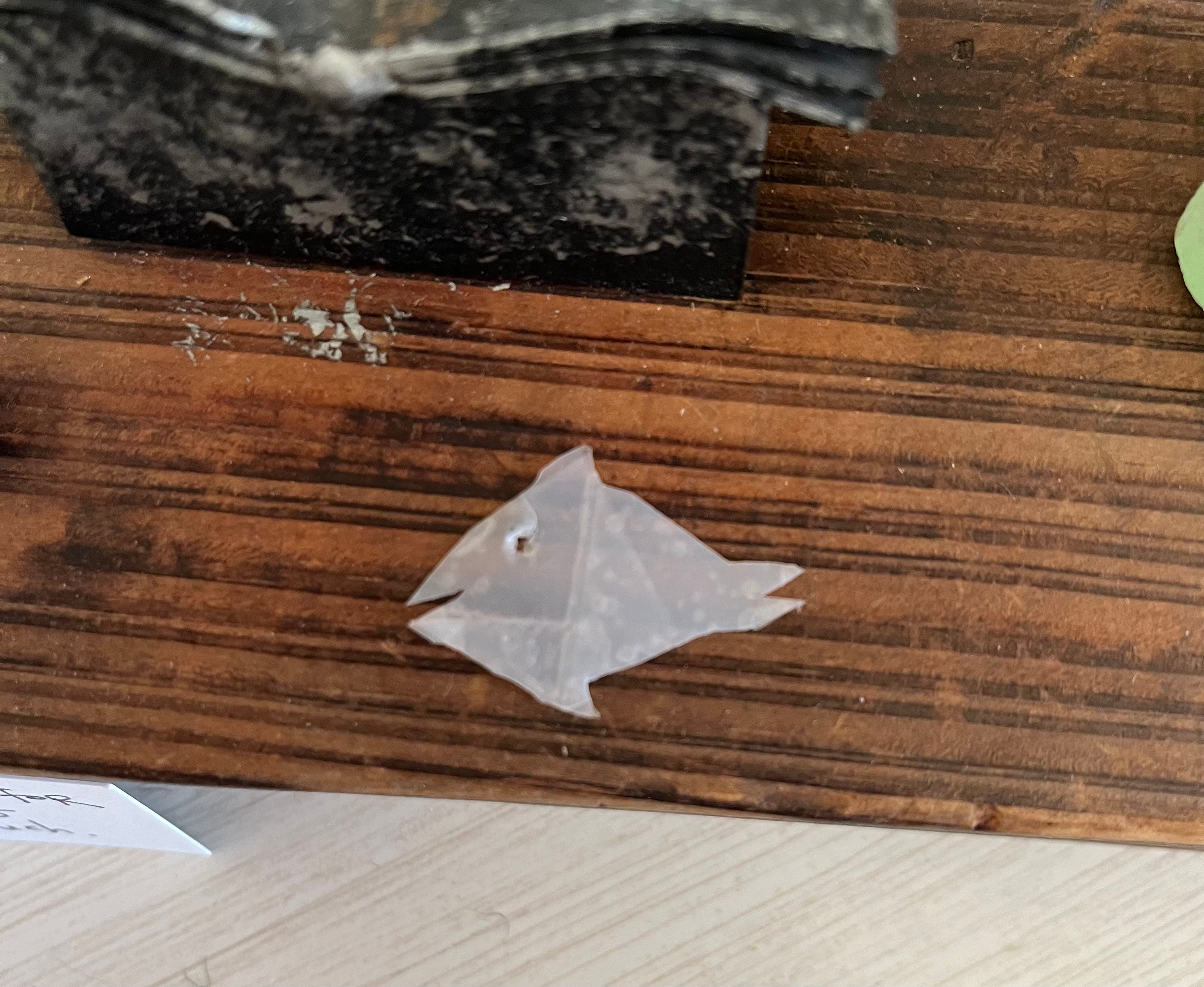
“It’s for you,” they say, meaning me. It’s a joke, it’s a…I don’t know what it is… but there’s evident pride in the accomplishment. It truly is a good fish.
What would you do? I could bitch and complain, then instruct. Sometimes I do, I don’t need to lie. But what are we learning in life? What is school for? The subjects? The humanity? What? I looked at the fish. It was very simple, but rather artfully done. Out of scotch tape. I took it, as the gift it was.
Without making much fuss, I placed it between the pages of a book and returned to my importance, the tangle of codes, drawings, and phrases sprawled across the blackboard. What I enjoy about life, what is often the most thrilling for me, is doing three to five things at the same time, allowing the confusion and pleasure of several threads of experience to weave us into a tangle of non-remorse. Of having been there, having swallowed the truth with the lies, and having, playfully and lovingly, not been lost in the details.
This student also hates fractions. But they’re good at them. They think they aren’t, but they are. They’re sometimes slower at completing problems, but it’s remarkable to me how, through regular practice, they have mastered concepts and created structural space in their mind to tackle operations that were once tricky to impossible. Dyslexia, dysgraphia, dyscalculia – are these things real? The answer, of course, is yes. The answer is always no.
Mental operations are different for different people. Some people have imaginations that are rich with images and colors. Others see only foggy representations and imagine things more as logical constructs. Words, images, feelings, sensations. It’s a rich mix in there, and it’s not the same for everyone. Some feel physical sensations in their imaginations. Some hold incredibly long strings of numbers or memories in active mental space, long enough to carry out detailed, consecutive operations and produce answers. Others forget. Some people, well into adulthood, misspell common words. We forget names, recognize faces. We hide behind the fear of uncertainty and self-doubt. Is there even one person on the face of the planet that is not impaired by their cognitive ignorance? Or, rather, inspired?
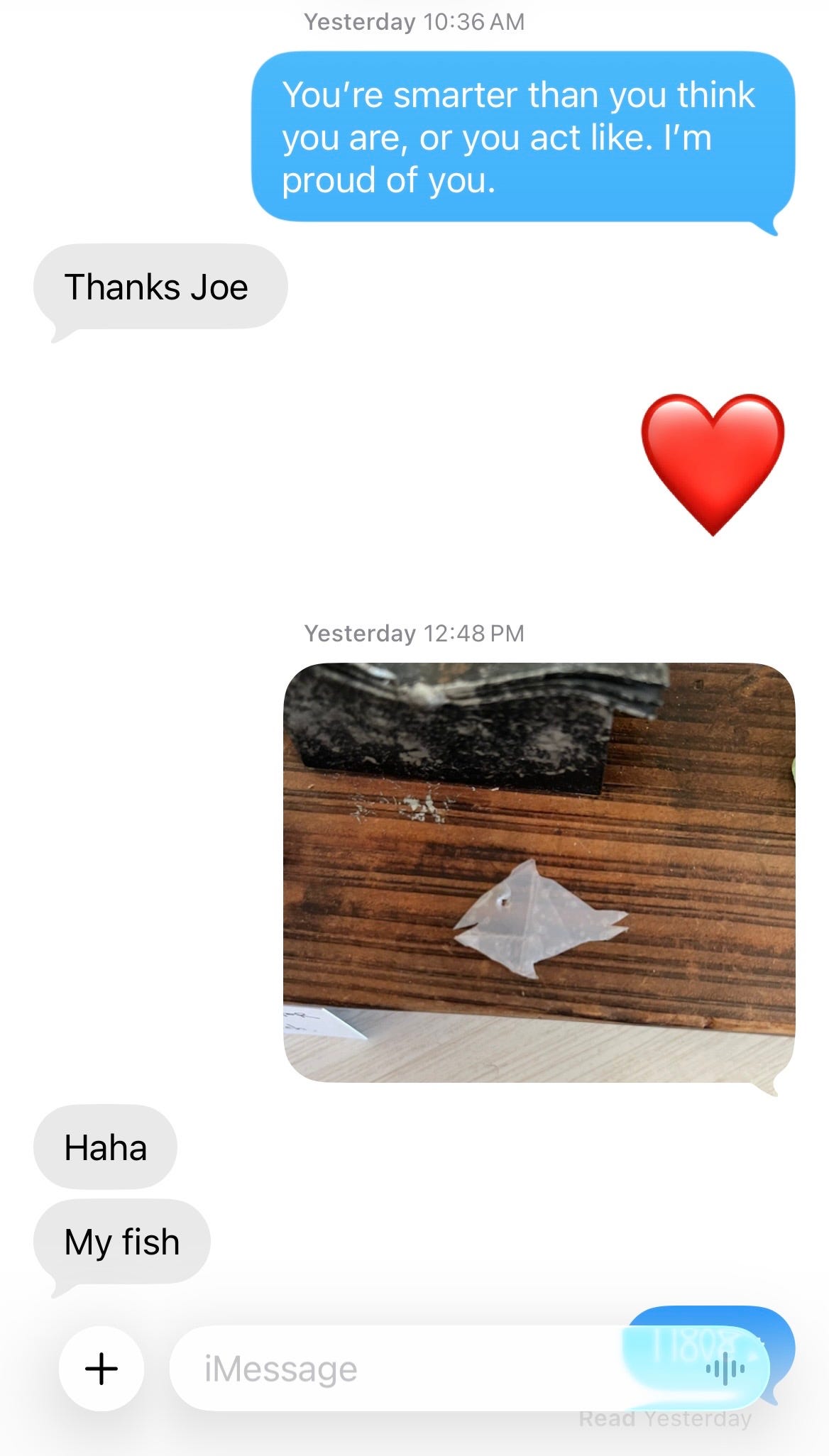
Smart. What does this word mean? Look closely enough at a grain of sand and it ceases to be a grain of sand. Its color disintegrates to infinity. If it’s useful to instruct children to think of themselves as better or worse than others, then keep doing it. I think it’s sorta pointless, or worse. There’s something in the majesty of each child. There’s something smart in the way each of us apprehends a moment. A chronology, a flapper, a fish. Who is learning what?
A few days later, I was feeling warmth and care for this person, honest admiration in my heart. I know that they struggle at times to feel the integrity of their own being. This, more than anything, is what I’d like to be, a mirror for a child in which they have a chance to see their own light. You’re smart. Of course you are. That was a good fish. You were listening. Don’t ever doubt that. That’s what being smart is: you.
Small, boring, plain. Love. Go big.
This was an especially beautiful read. (All yours are, but this one and the graduation “speech” one really cracked open my heart.) Thank you for sharing.